
A clean start in vehicle dynamics.
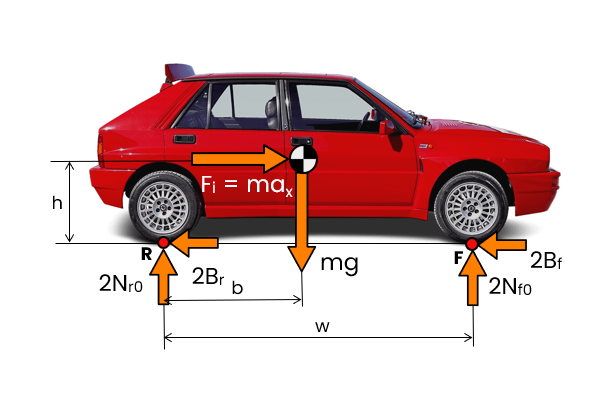
A 12-hour online course on tires, load transfers, understeer, and the g-g diagram, taught as one connected whole. The foundation needed to make sense of the rest of vehicle dynamics.
Enrol nowSounds familiar?
The car understeers in the key corners of the track. You lower front pressures, it feels a bit better, but you lose lap time. You try changing rear toe alignment, it corners better, but the driver complains it feels too nervous. Eventually, you run out of ideas and get stuck. You can't get out of this situation with more sensors or more graphs or some AI. You simply need more understanding of the physics, specifically how grip changes in each axle and how it moves between front and rear. That's what actually controls how the car behaves in a corner.
What changes after 6 weeks
• You'll understand the fundamentals of why a car understeers, and what you can and can't do about it with the physics you'll learn here.
• You'll know how load transfer moves grip between the axles under braking and cornering, and why changing tire pressures or alignment shifts the balance in the direction it does.
• You'll be able to read a g-g diagram from telemetry, and use it to see how much of the car's performance envelope is actually being used, where there's margin to improve the setup, and where there's margin to improve the driver's use of brake, throttle, and steering.
• You'll be able to open a vehicle dynamics book and understand enough of it to keep deepening on your own.
Get the full picture
"Before Course 1, I knew some vehicle dynamics concepts separately, but I could not connect them into one clear picture. Now I can use simple models, such as the friction ellipse, load transfer, and the GG diagram, to understand the limits of a vehicle in braking, acceleration, and cornering. I can also interpret the GG diagram not only as a vehicle performance map, but also as a way to understand driver behavior and circuit characteristics.
I would say that Course 1 is a very good starting point for learning vehicle dynamics. The course uses simple models, but it does not feel oversimplified, because it connects theory, equations, numerical examples, and practical interpretation very well. Even if you already know some concepts, it helps you understand how to actually apply them to vehicle performance, driver behavior, and setup analysis."
Yuki Uto - Kawasaki Heavy Industries
"I've spent 4 years trying to learn Vehicle Dynamics without a mentor, always going to more complicated topics before my fundamentals were built. The 3 course procedure that you offer, learning all concepts at the same depth, completing the loop and then going deeper rather than 0-100 in each topic and then the next, changed that.
Now I can build models very quick and efficiently with great clarity. Earlier, I would struggle to explain to my FSAE juniors how toe in or toe out would affect the behaviour of the car, but now that has become clear thanks to your lecture. I feel like explaining linear tires gave me 90% of what I needed to know about tires and all the more complex models are just for deeper accuracy, which you may not even need depending on the application. The biggest selling point of this course is the structure, I like it very much. It gave me clarity on so many vague concepts that were in my mind but not connected.
If I could learn vehicle dynamics from 0, I would without a doubt learn from your lecture. I don't think there is a better resource on the internet today."
Kritik Modawel - Formula Student engineer, Ashwa Racing
What you'll learn
Introduction
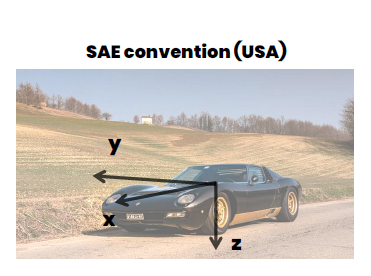
The language of vehicle dynamics. Reference frames, sign conventions, and the assumptions we make.
Tires
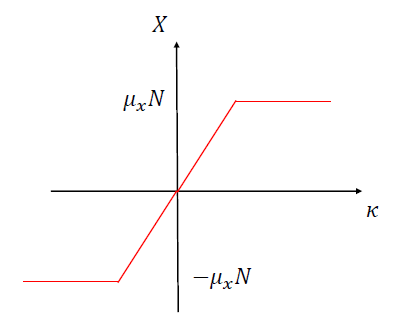
How a tire generates force. Slip angle, slip ratio, friction circle, and why load sensitivity changes everything.
Longitudinal dynamics
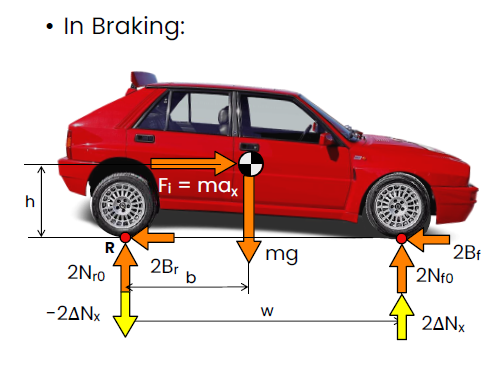
Braking and acceleration. Load transfer, weight distribution, brake bias, and the adherence diagram.
Lateral dynamics
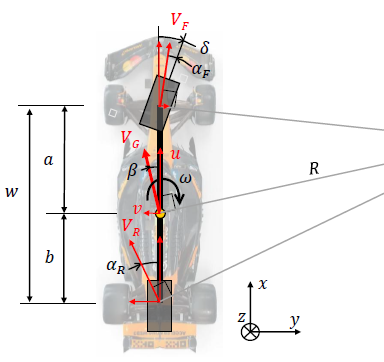
Cornering geometry, single track model, understeer/oversteer, stability
Lateral load transfer
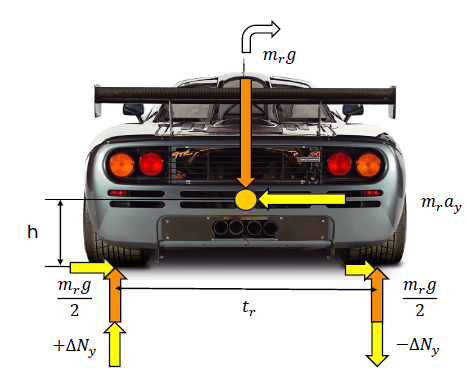
Overall lateral load transfer, axle characteristic and how to change it with wheel alignment
The g-g diagram
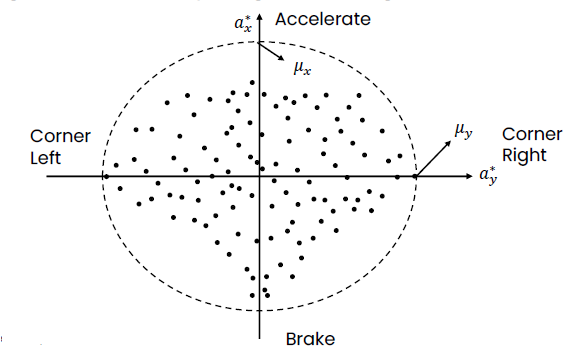
Putting it all together. How to read and use the g-g diagram to evaluate your car's performance.
Who is this for
For:
FSAE students who've read the books but can't connect the theory to what their car does on track. Junior race engineers in their first 0–5 years who never had a proper vehicle dynamics course. OEM engineers who never had a proper vehicle dynamics course that made things click.
NOT for:
Engineers looking for advanced setup work on suspension, aero, or compliance. This is the foundation before that. Engineers looking for a software tutorial or a lap sim course. Anyone expecting to become a race engineer in 6 weeks. This course teaches you to think with the fundamentals, not to replicate someone else's process.
About the instructor
I'm Felipe Vasquez. I hold a PhD in vehicle dynamics from the University of Southampton, with peer-reviewed research on tire force estimation. I taught Vehicle Dynamics, Dynamics, and Machine Design at the University of Concepción for five years, working with FSAE-style student projects and industry data from KTM and Kawasaki. I race actively in touring cars and motocross, which means the physics on these slides is also the physics I use on track. I teach the phenomena behind vehicle behavior so you can think about your car, not just guess
What you get
• 6 live sessions of 2 hours covering from tires basics to the g-g diagram.
• 6 sets of exercises to be solved by hand, designed to help you interiorize the concepts.
• 2 live Q&A sessions to discuss your questions and go deeper into some topics.
• A private WhatsApp group for the cohort, where you can ask questions between sessions, share resources, and connect with other engineers from around the world.
• Access to recordings of every session so you can revisit at your own pace. Available for three months after the course ends.
When/how?
• One session every Thursday
• 9:00 h New York, 15:00 h Central Europe, 18:30 h India
• Starts Thursday, September 3, 2026
• Q&A: September 22, October 20, 15:00 h Central Europe
Enrol now
• Limited to 20 seats, so I can give each student proper attention during Q&A.
$367
$367
early bird until 27 August.
Guarantee
Complete every session, do every exercise, attend the Q&A calls. If after all that your understanding of vehicle behavior hasn't changed, I'll refund you in full. No questions asked.
Frequently Asked Questions
Do I need an engineering degree?
No. You need to be comfortable with basic physics and basic calculus, like forces, free body diagrams, derivatives and integrals. You don't need to solve differential equations or follow long derivations.
How is this different from reading Milliken or Gillespie?
Books aren't designed to teach, they're designed to be a reference. They cover everything with the same weight, and leave you to figure out the order. This course tells you which concepts matter first, and how they connect. After it, you'll be able to open those books and understand enough to keep going on your own.
What if I've already read these books and taken online courses?
Then you've probably seen most of these concepts in isolation. The value of this course isn't in the concepts themselves, it's in the order and connection between them. If you've already read everything and nothing clicks, this is exactly the course for you.
How much time do I need to commit per week?
Two hours per week for the live session, plus around two to three hours on the exercises. The exercises are where the real learning happens, so I recommend not skipping them. If you can dedicate around five hours per week, you'll get everything out of the course.
Is there any way to interact with other students?
Yes. Every cohort has a private WhatsApp group where you can ask questions between sessions, share things you've found, and stay in touch with other engineers from different countries and categories. For many students, this ends up being one of the most valuable parts of the experience.
Who reviews the exercises?
You review them yourself, against the solutions I provide. The exercises are designed for active application, not for grading. If you get stuck on a specific exercise or don't understand a step of the solution, you can bring it to the Q&A sessions and we work through it together.
What if I can't attend live?
Every session is recorded and available within 24 hours. You can watch at your own pace. The live sessions are where the conversation and Q&A happen, so attending live helps, but the material is all there for you either way.
I'm in a different time zone, can I still benefit?
Yes. The recordings are the main path for anyone in a distant time zone. For the two Q&A sessions, if you can't attend live, you can send your questions ahead of time through the cohort's WhatsApp group and I'll address them during the session. You'll see the recording after, with your question answered in context. The WhatsApp group itself is async, so you can participate on your own time.
How long do I have access to the course?
You keep access to the recordings and can download the exercises for three months after the course ends. That gives you time to revisit concepts, redo exercises, and use the material during your next season or project.
Do I need my own car or data to get value out of this?
No. The course is about the physics, not about a specific dataset. If you don't have your own car or data, you'll still learn everything the course teaches. If you do have access to a car or telemetry, you'll come out with a sharper eye for what you're looking at.
Is this about a specific car or category?
No. The physics in this course applies to any car with four wheels, regardless of category. I teach the fundamentals, not the specifics of any formula or championship.
Will I learn to use simulation software?
No. This course is about the physics you need to understand before using any software. Simulation tools don't teach you vehicle dynamics, they assume you already know it.
Will this help me in interviews or on the job?
I can't promise an interview result, but I can say what this course actually changes. When someone on a team talks about load transfer, grip balance, or a g-g diagram, you'll understand what they mean and be able to contribute. When an interviewer asks you why a car understeers mid-corner, you'll be able to explain it clearly, not guess. That's the kind of difference this course makes.
What happens after Course 1?
Course 2 adds suspension, aerodynamics, and a deeper understanding of tires. The anchor there is the Yaw Moment Diagram. Course 3 adds chassis compliance, transient behavior, and how tire temperature and pressure change everything. Each course builds on the previous one.