
The Yaw Moment Diagram for setup
The Yaw Moment Diagram has the balance, stability and control of your car in one picture. In this live workshop you'll build one, learn to read it, and see how each setup change moves it, so you can use it on your own car. Wednesday 25 November, 3 hours on Zoom.
Book your seatSounds familiar?
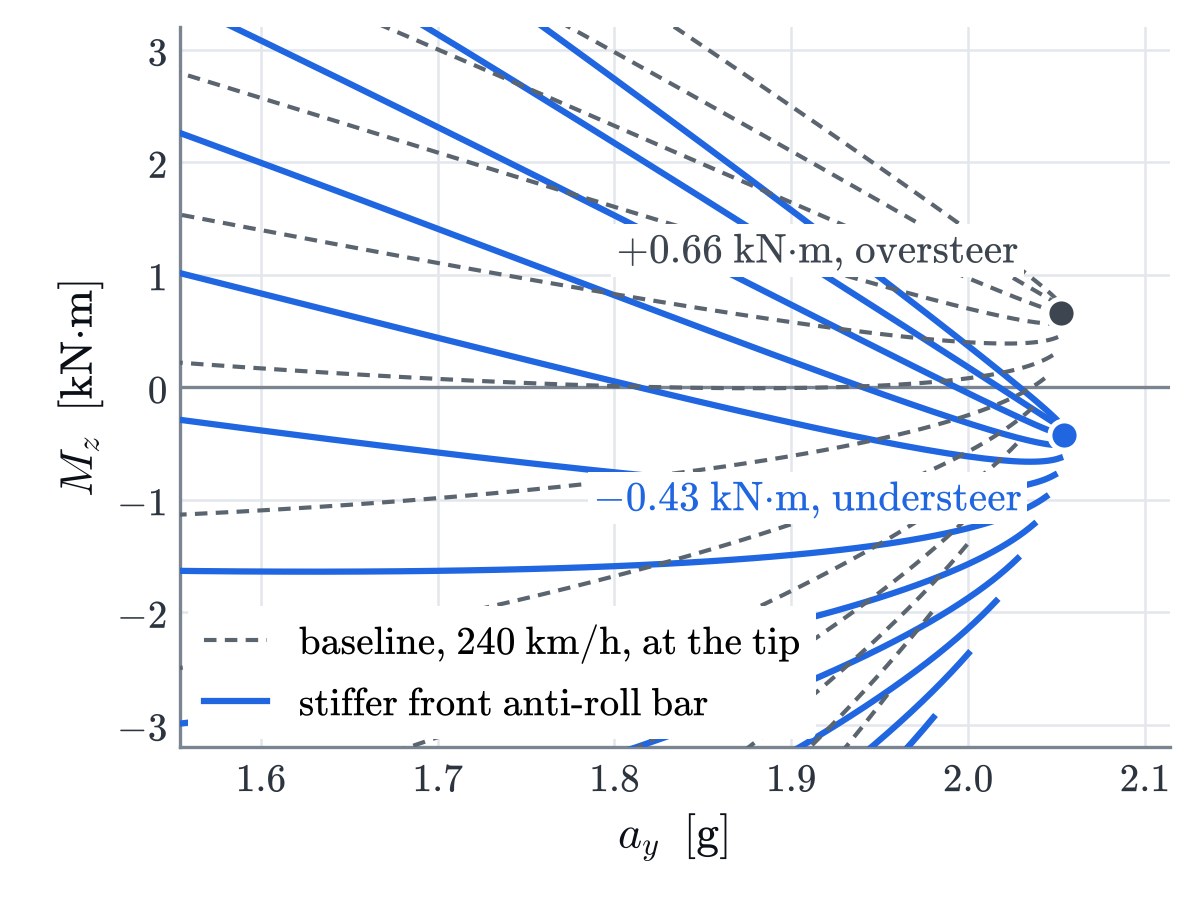
You've seen this plot online. It looks like it says a lot about the car, how much grip it has, if it understeers, how stable it is, all in one picture. But when you look at it, it doesn't tell you much.
Maybe you coded one and couldn't tell if it was right. Or you know your car well, and you can feel the plot could show you something you haven't seen yet.
But it stays as a good idea to study someday.
What changes after the workshop
• You'll know how to build a Yaw Moment Diagram and read the balance, stability and control of the car from it.
• You'll be able to tell from the diagram if the car understeers or oversteers at the limit, and how much margin it has.
• You'll know which way a setup change moves the diagram, before you test it.
What you'll learn
Yaw moment, the idea
Why every handling problem ends up as a yaw moment, and what balance, stability and control mean in those terms.
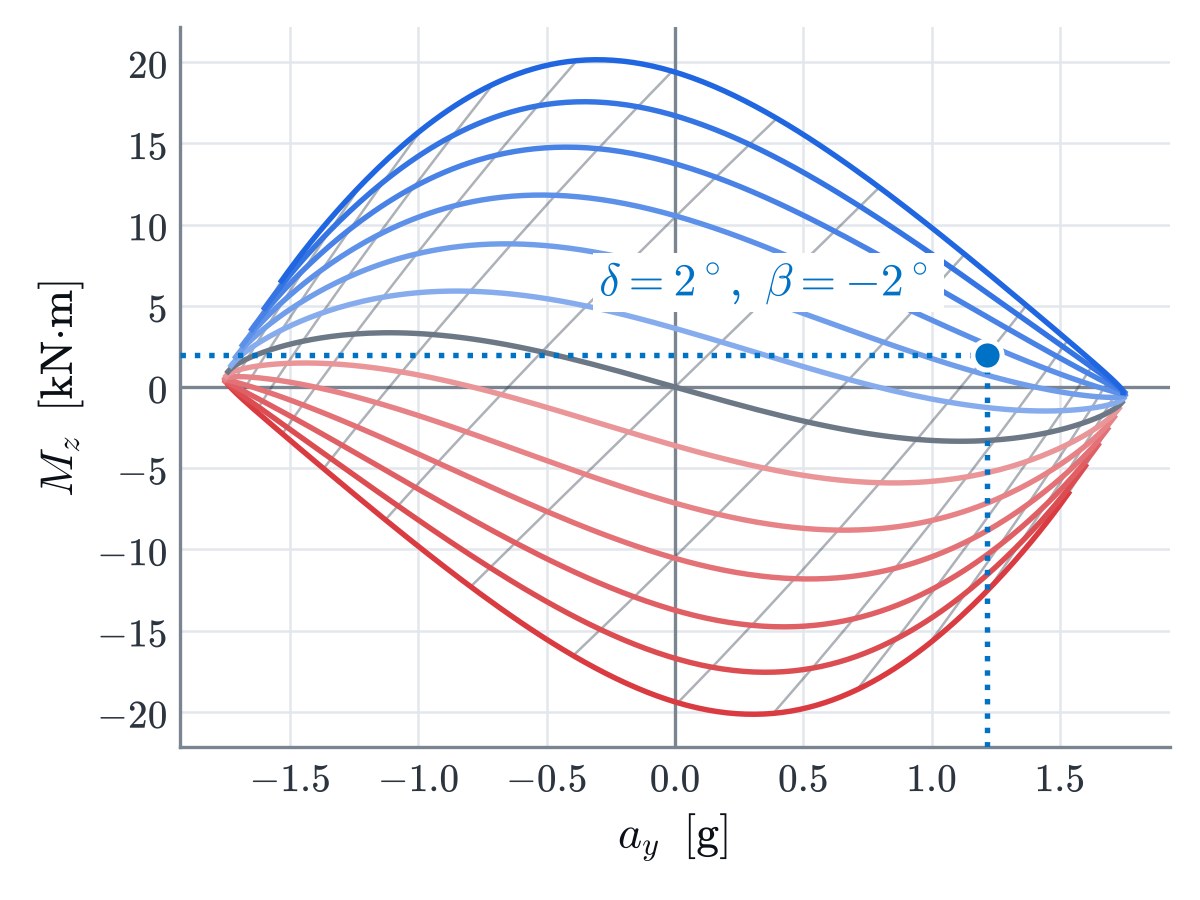
Building the diagram
Sweep body slip and steering angle, add up the tyre forces, and plot lateral acceleration against yaw moment.
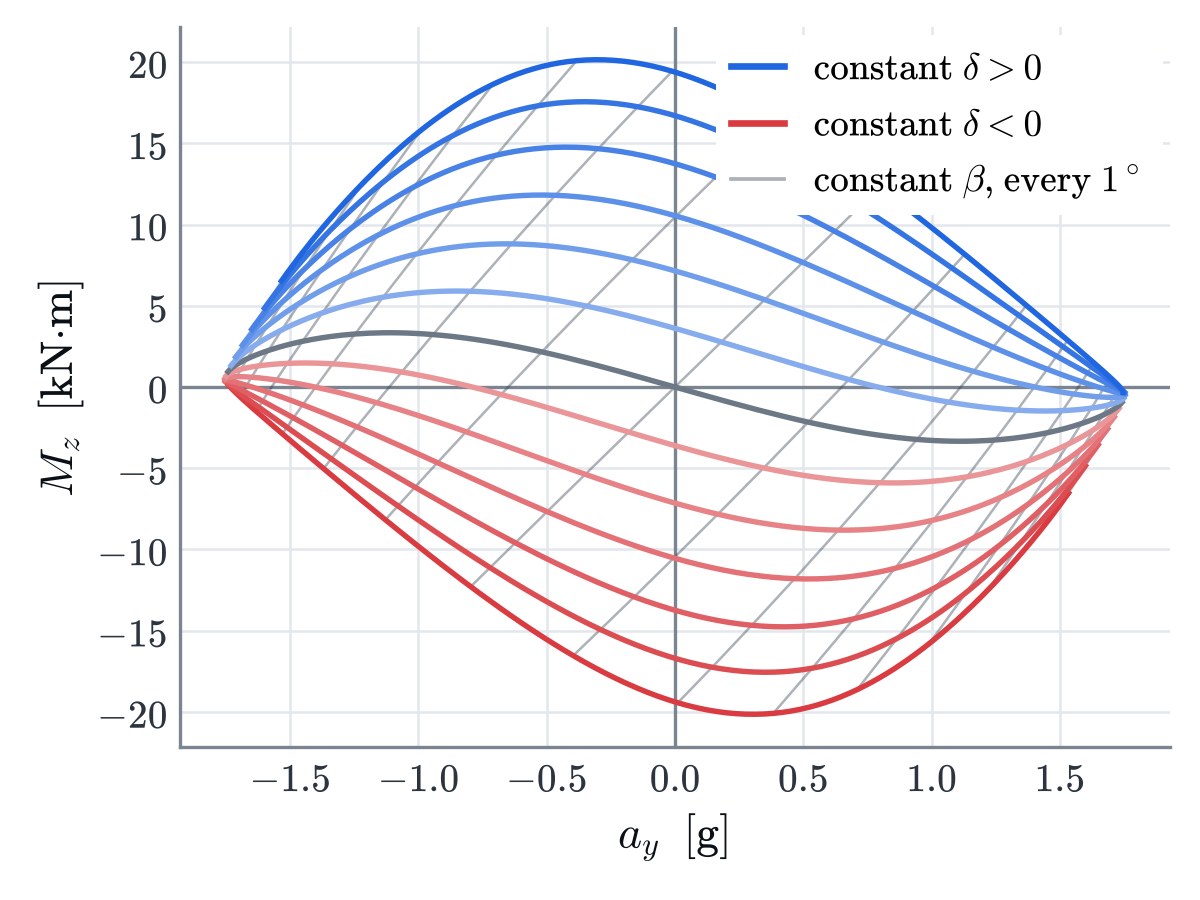
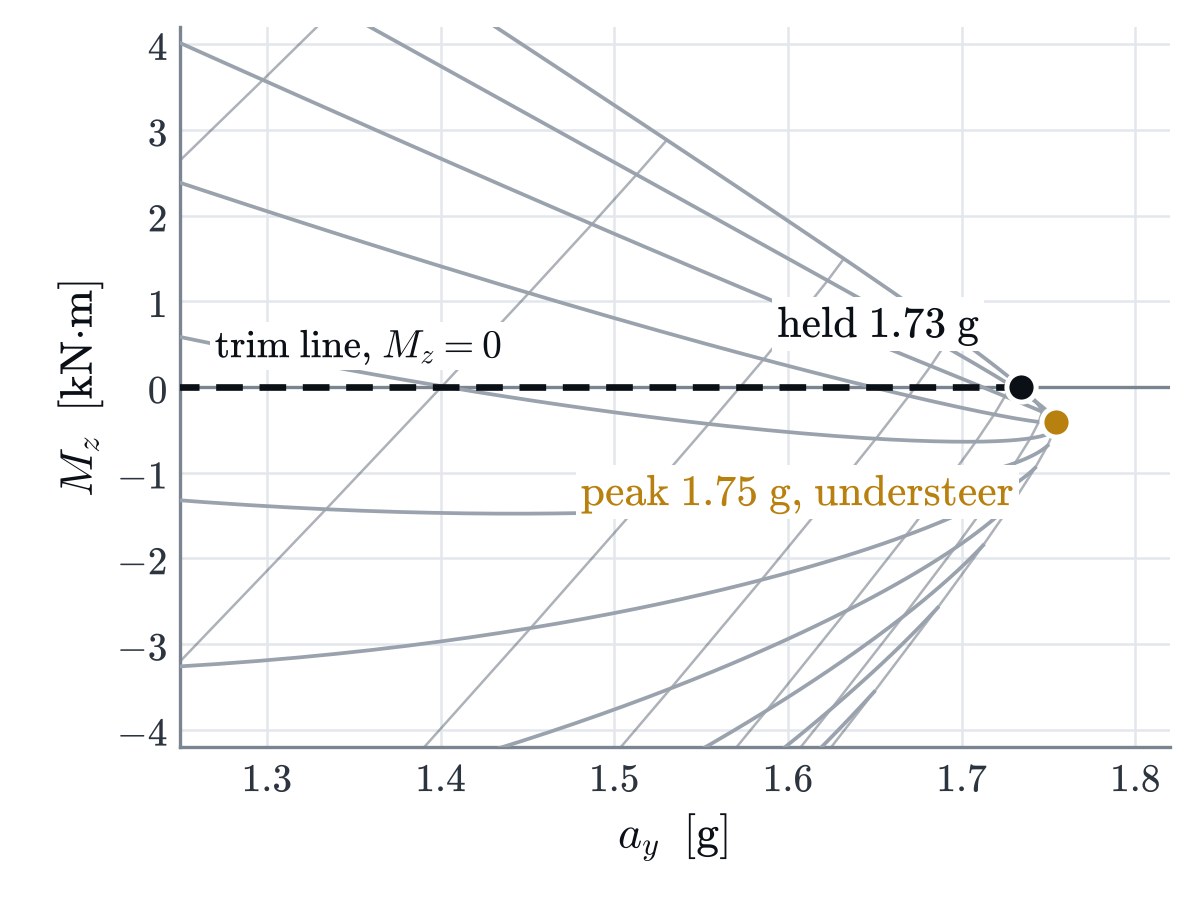
Balance
Where the diagram crosses zero yaw moment, and what that says about understeer and oversteer at the limit.
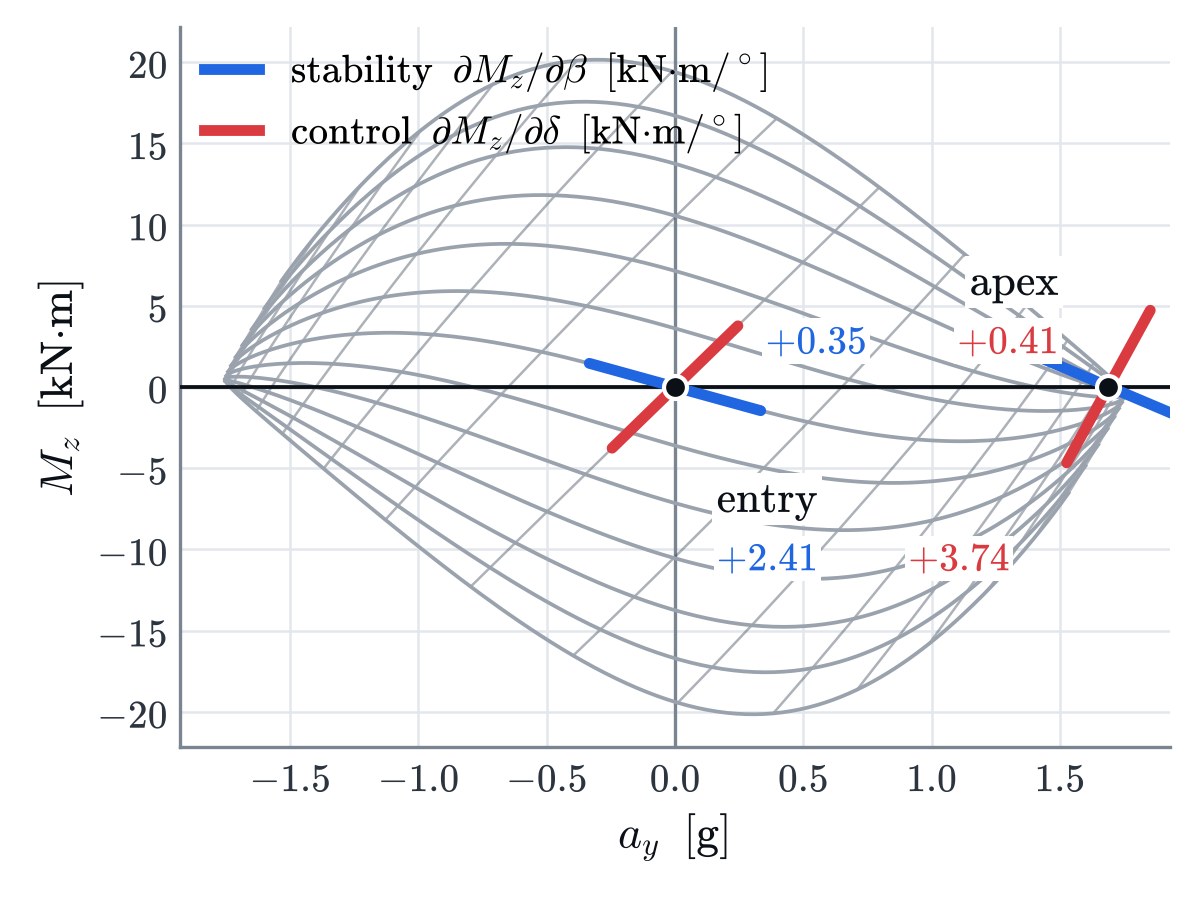
Stability and control
The slopes of the diagram. How fast the car comes back after a disturbance, and how much yaw moment the steering still has.
Setup changes
What springs, ARBs, weight distribution and tyres do to the shape of the diagram.
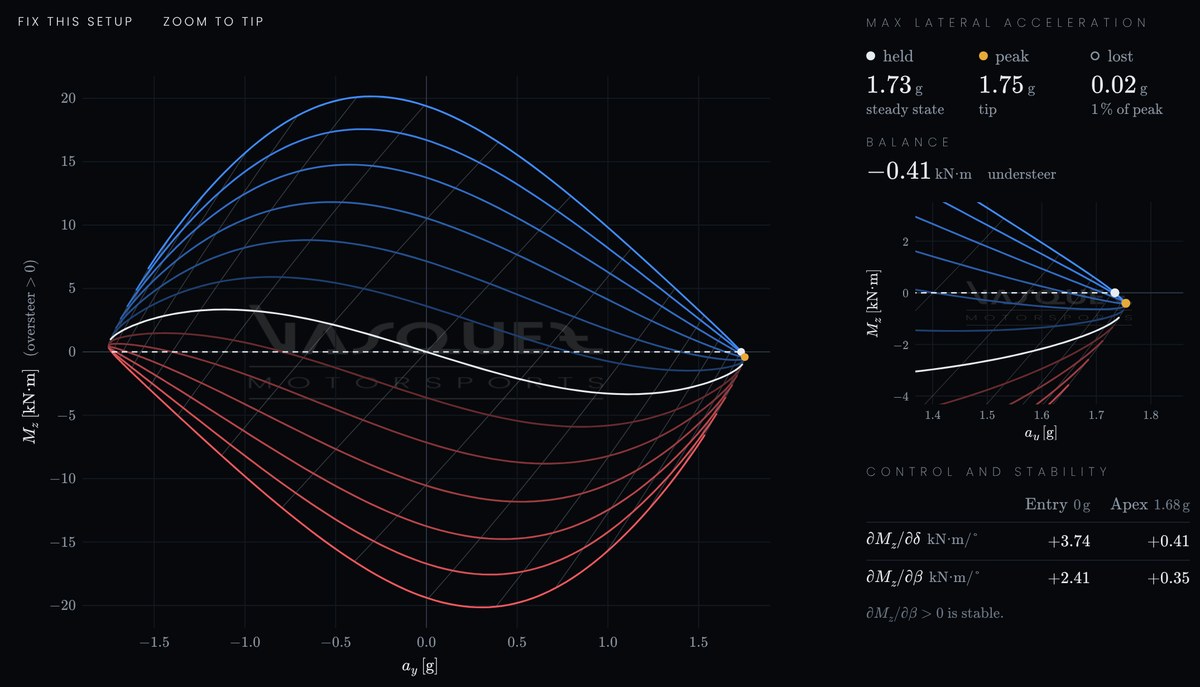
VM-YMD, live
Every result shown in VM-YMD, so you can check it yourself afterwards with your own numbers.
Who is this for
For:
• Race engineers who make setup changes and want to see what each one does to the balance before going to the track.
• FSAE students and engineers who already know load transfer and tyre slip.
NOT for:
• People without a foundation in vehicle dynamics. Start with Course 1.
• Engineers looking for a software tutorial.
About the instructor
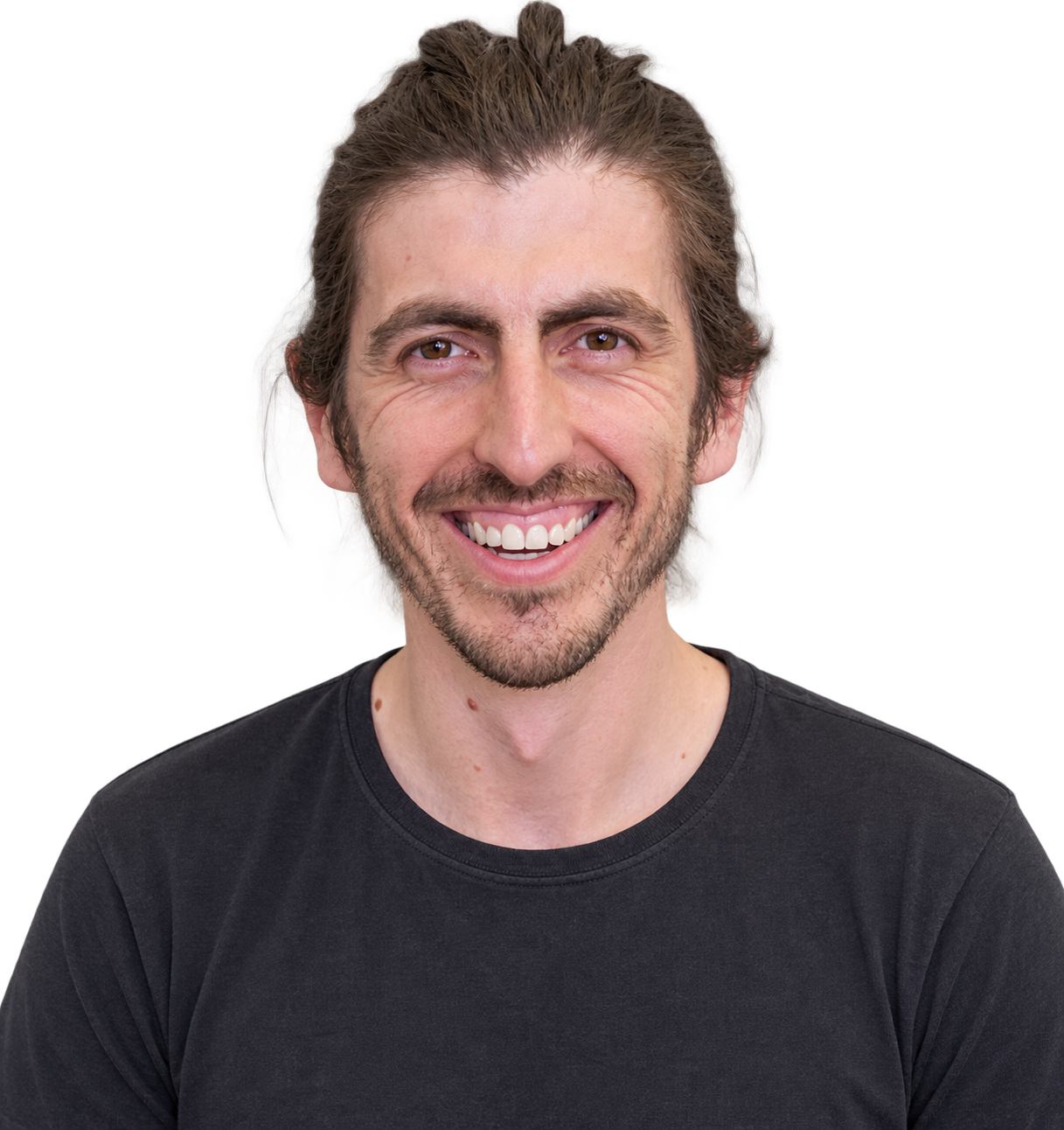
I'm Felipe Vasquez. I hold a PhD in vehicle dynamics from the University of Southampton, with peer-reviewed research on suspension optimisation and tyre force estimation. I taught Vehicle Dynamics, Dynamics, and Machine Design at the University of Concepción for five years, working with FSAE-style student projects and industry data from KTM and Kawasaki. I raced touring cars and motocross, so the physics I teach is also the physics I've felt on track. I teach the phenomena behind vehicle behaviour with the simplest possible models, so you can use them to think about your car, not just guess or wait for simulations.
What you get
• One live session of ~3 hours on Zoom, with time for your questions.
• VM-YMD full version, the app we use during the session.
• The recording of the session.
When/how?
• Wednesday 25 November 2026, 15:00 Chile · 18:00 UK · 19:00 CET · 23:30 India.
• Live on Zoom. I send you the link by email within 24 hours of your payment.
Book your seat
• Buy Course 2 after the workshop and you get 70 USD off, the price of the workshop.
• Undergraduate or master's student? Send me your proof of enrolment and you get 25% off.
Live workshop
$70
Wednesday 25 November, 3 hours on Zoom.
Guarantee
Attend the session and try the app. If within 30 days your understanding of what the setup does to the balance of the car hasn't changed, I'll refund you in full. No questions asked.
Frequently Asked Questions
Do I need an engineering degree?
Not technically, I don't ask for it, but you need to be comfortable with free body diagrams, load transfer and tyre slip.
What if I can't attend live?
The session is recorded, so you can watch it at your own pace.
I'm in a different time zone, can I still benefit?
Yes. The recording is the main path for anyone in a distant time zone. You can send me your questions before the session and I'll answer them live.
Do I need my own car or data to get value out of this?
No. The workshop is about the physics, not about a specific dataset. If you do have your own car, you'll leave knowing how to put its numbers into the diagram.
Is this about a specific car or category?
No. The physics applies to any car with four wheels, regardless of category.
What happens after the workshop?
If you want to go further, Course 2 builds the Yaw Moment Diagram step by step, with springs, dampers, ARBs, suspension geometry and the LSD.