
Black Friday · until Sunday 29 November
The whole car, as one clear picture.
The three recorded courses together, for race engineers. They connect what you already know in pieces, and give you the why behind the setup recipes you use. If you’re still on your way to the job, it’s a clean start, in the right order. 900 USD instead of 1,191 until midnight on Sunday 29 November, your time, and 750 USD for students.
Get the three courses · 900 USD
“I find myself coming back to the topics covered in these courses first and then I look at literature.”
Kritik Modawel, MSc Motorsport Engineering, took the three courses
Sounds familiar?
You’ve been working on cars for a while. You know what a stiffer rear bar does, what happens when you drop the front pressures. You learned most of it at the track, from engineers with more years than you, from Milliken or Guiggiani, from a course on one topic. And it works, most of the time.
But the weekend leaves very little time. In many championships testing is banned, so you arrive with the base setup from the workshop and FP1 decides where to go, while you’re doing three other jobs.
When the car doesn’t do what you expected, you ask someone with more experience, or you go by feel and try things. The answer is rarely in a book, and the detailed models fall apart at the track because they ask for numbers you can’t measure.
And there are parts of the car you’d rather not touch. Maybe the diff, maybe the roll centres or the anti-dive, where every source explains them differently. So the balance gets fixed with the springs and bars you know. It works, but you’re using fewer tools than the car has.
That’s how almost everyone learns vehicle dynamics in motorsport, one topic at a time, on the job. What’s missing is the order that connects it.
Three courses, one car
Each course looks at the whole car again, with more detail than the one before. So you never study a topic on its own, and when you get to the next level, the previous one is already in place.
COURSE 1
Fundamentals
The rigid car. Tyres, load transfer, understeer and the g-g diagram, the base the other two build on. If you already know it, it goes fast.
“…teaches one how to simplify any problem down to the fundamentals and solve them quickly by hand instead of relying on advanced software.” Kritik Modawel
See the 6 classes
- Tyres 1. Tyre characteristics and slips
- Tyres 2. Linear force model, force modifiers
- Longitudinal. Static loads, load transfer, braking and acceleration performance
- Cornering 1. Single track model, cornering stages, stability, understeer gradient
- Cornering 2. Lateral load transfer, axle characteristic, wheel alignment, maximum lateral acceleration
- GG diagram. The car as a particle and as a single track model, driver and circuit, GGV
COURSE 2
Engineering the Yaw Moment
The suspended car. Springs, dampers, ARBs, suspension geometry and the LSD, all read through the Yaw Moment Diagram, so you know which way to move the setup before you test.
“…builds up towards the yaw moment diagram, a critical tool that not many people are familiar with. It adds a lot of value… as it brings intentionality and understanding into the vehicle dynamics design process.” Kritik Modawel
See the 6 classes
- Vertical dynamics 1. Rough road description, performance indices
- Vertical dynamics 2. Quarter and half car models, optimal stiffness and damping, motion ratio
- Kinematics and steering. Four bar mechanism, suspension gains, jacking, antis, steering axis
- Roll dynamics. Single axle, lateral load transfer, double axle roll, chassis stiffness, roll stiffness distribution
- LSD. Vehicle demand, differential capacity, yaw moment, setup
- Yaw Moment Diagram. Building it, reading it, a more realistic YMD, the YMD for setup
COURSE 3
Engineering the Real Car
The real car. Tyre lag, compliance, non-linear springs and dampers, and how the car responds in time, so you can work on the details that make a fast car even faster.
“This course completes the loop from basic theory to the mathematics behind the setup changes we make at the track.” Kritik Modawel
See the 6 classes
- Tyres. Brush model, tyre transients, Magic Formula, pressure setup
- 4 wheel model and compliance. Kinematic, congruence and equilibrium equations, compliance
- Handling. Steady state gains, open loop transient, the driver, handling in the data
- Nonlinear suspension. Displacements, velocities, detachments, motion ratio
- Transients. Corner entry, corner entry with brake, lift off, power on
- Sensitivities. KPIs, parameters, how each parameter moves the car in each situation
“The best part about the 3 courses is the structure. Course 1 covers vehicle dynamics fundamentals, course 2 expands into how the different parts of the car govern those fundamental parameters, course 3 adds the real life complexities, examples and application scenarios to the previous 2 courses.”
Kritik Modawel, MSc Motorsport Engineering, took the three courses
What changes after the three courses
- Entry, mid-corner and exit. For each phase of the corner, you’ll know which parts of the car set the balance, from the tyres and the load transfer to the diff and the dampers, and which way each setup change moves it.
- Before the weekend, you’ll know which changes move the car the most, so you arrive with a short list instead of a long one.
- At the track, you’ll turn what the data shows into the phenomena behind it, and from there into the change that acts on it.
- With the driver, you’ll understand what he feels in the car in terms of physics, see in the g-g how much of the car he’s using, and explain each change in words he understands.
- And when someone asks you why, you’ll know why your setup recipes work and when they stop working, and you’ll explain it clearly to the other engineers.
“The course checked in depth the physical aspects behind vehicle dynamics, avoiding the “recipe” approach.”
Felipe Canales, MSc Motorsport Engineering, Oxford Brookes, took the three courses
Or you can keep fixing the balance with the same springs and bars for one more season.
What you get
- 18 recorded classes of about 2 hours each, 36 hours in total.
- 18 sets of exercises written for the course, about 2 hours each, all with results.
- Live Q&A sessions on Zoom twice a month, open to every active student, to go deeper into the topics you need.
- Short questions answered on WhatsApp.
- 12 months of access to the three courses.
How does it work?
- Once you pay, I’ll send you the login to the three course pages within 24 hours.
- I recommend going in order, one class per week with its exercises, about four hours a week. It’s recorded, so you set the pace.
Who is this for
For:
- Race engineers who learned vehicle dynamics in pieces and want to fill the gaps, put it in order and understand the why behind the recipes they use.
- Engineers on their way to the job, from Formula Student, an MSc or an OEM, who want a clean start, from the fundamentals to the advanced topics, in order.
NOT for:
- Engineers looking for a software tutorial or a lap sim course.
- Anyone expecting to become a race engineer in a few weeks.
- Engineers who already took one of the courses. Message me and I’ll send you the price for the other ones.
“A solid head start for the Vehicle Dynamics module of the MSc in Motorsport Engineering. On the FSAE side, it gave me more confidence to take on tasks that would have been quite more challenging without it.”
Felipe Canales, MSc Motorsport Engineering, Oxford Brookes, took the three courses
Why I teach it in this order
I started studying vehicle dynamics seriously in 2012, designing dampers and suspension setups for rally and off-road teams in Chile, including a quad for the Dakar. I started from the wrong end, with the non-linear suspension before the linear fundamentals, and I didn’t notice for years, not even after an MSc and a PhD with KTM at Southampton.
It clicked when I had to teach vehicle dynamics at the University of Concepción. I had to go through the linear models and the fundamentals in order, and only then I saw how everything I already knew fitted together.
Now, teaching race engineers online, I see they know a lot. What they don’t master, they usually don’t touch. If the diff isn’t clear, it stays where it is, and the balance gets fixed with the springs and bars they know. It works, but the car has more tools than they’re using.
That’s why the courses go over the whole car three times, each time with more detail, so no part of the car stays as the one you’d rather not touch.
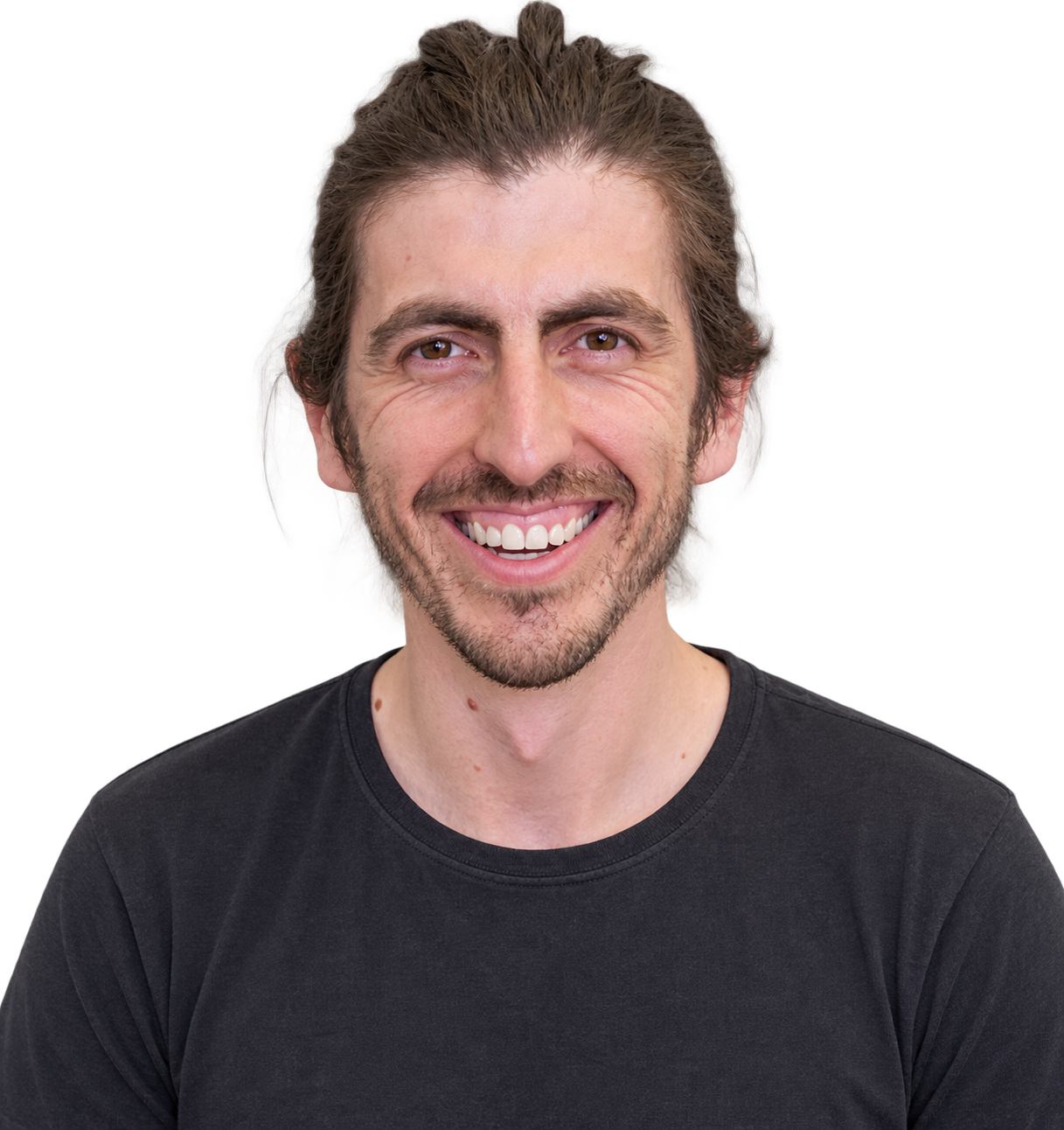
Felipe Vasquez. I build vehicle models, check them against data measured on track and turn what they show into setup changes. At the 2015 Dakar, the rider of the quad I set up said he could ride about 15 km/h faster on average, with less arm fatigue and no bottoming. Today I work on motocross track data with Kawasaki, and I built the models behind the VM-YMD and VM-LSD apps.
For five years I created and taught the Vehicle Dynamics course at the University of Concepción, where I also ran the racing team and raced its touring car and motocross bike. Now I teach these courses online to engineers from nine countries. PhD at Southampton, with KTM.
Black Friday pack
Course 1 + Course 2 + Course 3 · recorded
$900$1,191
Until midnight on Sunday 29 November, your time. After that, each course goes back to its own price.
- Undergraduate or master’s student? Send me your proof of enrolment and you pay 750 USD.
- Joined the YMD workshop? What you paid for it comes off the pack.
- 12 months of access, start any day.
“Relatively low price compared to other alternatives that offer just a brief glimpse of what is actually covered.”
Felipe Canales, MSc Motorsport Engineering, Oxford Brookes, took the three courses
Get the three courses · 900 USD
Having trouble paying? Message me and I’ll help you solve it.
Guarantee
Watch the sessions, do the exercises, bring your questions to a live Q&A. If within the first 30 days you feel your understanding of vehicle behaviour isn’t changing, I’ll refund you in full. No questions asked.
Frequently Asked Questions
Do I have to take the courses in order?
I recommend it. Each course builds on the one before, and that order is a big part of what you’re paying for. If you already know the fundamentals well, you’ll go through Course 1 fast.
I’m a race engineer. Isn’t Course 1 too basic for me?
Parts of it may be. Course 1 is where the notation and the models start, and Courses 2 and 3 build on them. If you already know it, it’ll take you a couple of weeks, and you’ll have the same base as the rest of the material. I don’t spend time on what a wishbone or an anti-roll bar is, I go straight to the physics and the main parameters.
“It doesn’t follow only one book, but different references and approaches, with case studies, and it even challenges beliefs and concepts taken for granted in books.”
Felipe Canales, MSc Motorsport Engineering, Oxford Brookes, took the three courses
Do I need an engineering degree?
Not technically, I don’t ask for it, but you need to be comfortable working with free body diagrams and university level maths.
I work during the season. When would I do this?
It’s recorded, so you can do it between events or in the off-season. One class per week takes about four hours, two for the recording and two for the exercises, so the three courses take around 18 weeks, and you have 12 months of access.
What happens after Sunday 29 November?
The pack closes and each course goes back to its own price, 367, 397 and 427 USD.
Can my company or university pay?
Yes. Message me and I’ll send you an invoice in the name of your company or university.
Get the three courses · 900 USD
Not sure yet? Try the free VM-YMD app.